

Texas’ Extreme Summer Heat Tricks Asian Pear Trees Into Autumn Flowering
Texas' extremely hot summer followed by cooler temperatures and a deluge of rain is freaking out Asian Pear trees!
Asian Pear Trees Bloom Out of Season After Brutal Summer Heat
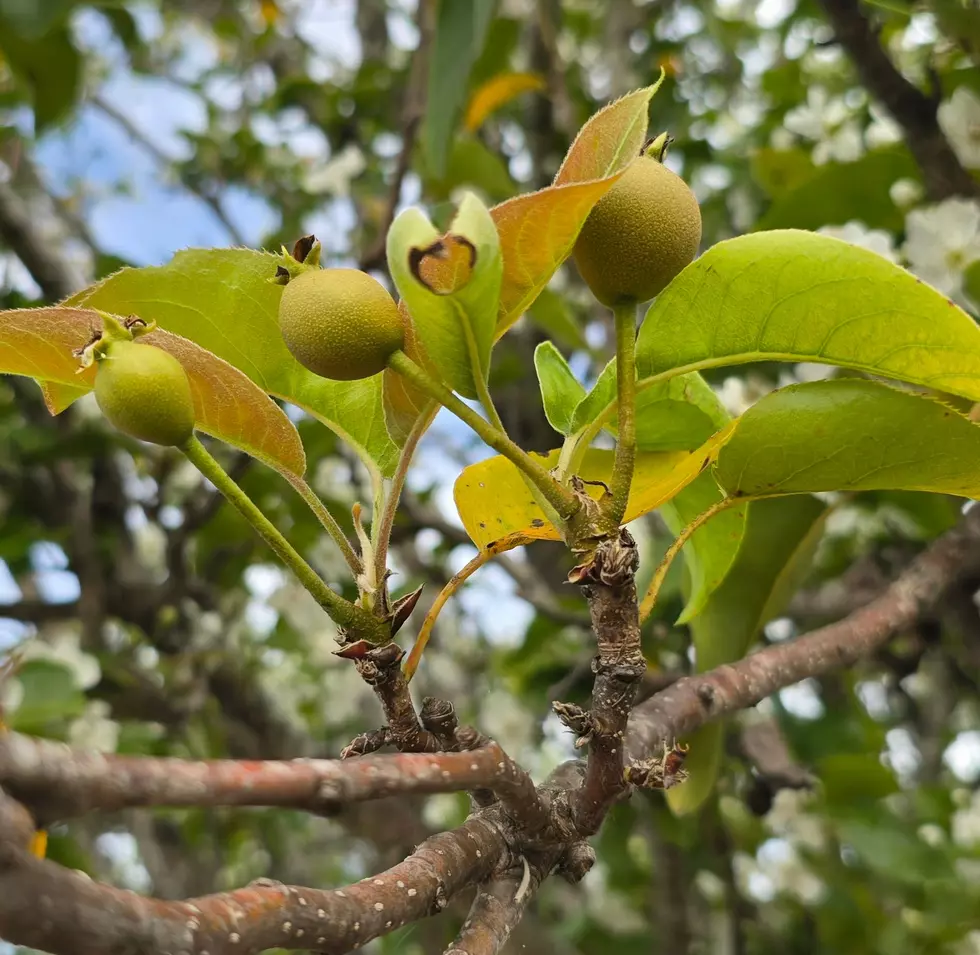
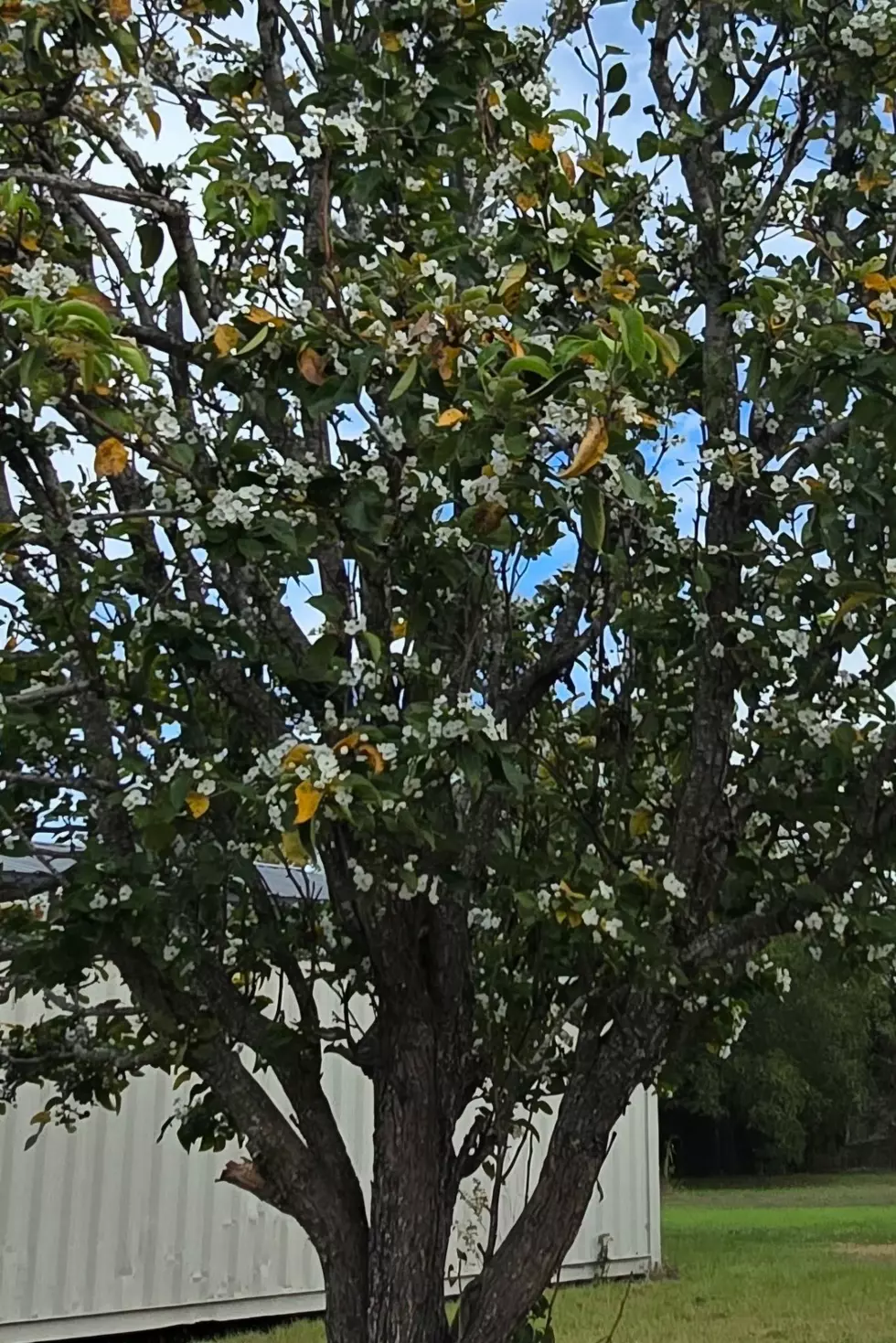
Autumn typically signals a time of harvest, leaf-peaking, and dormancy as orchards prepare for winter. But I am seeing something totally opposite in my yard. My Asian Pear tree is full of white blossoms and some tiny pears! I'm not complaining. I think my tree is beautiful, but in the 18 years I've lived here, I've never seen this happen.
Summer Heat Stress Takes a Toll
While the sudden floral display provides an unexpected splash of spring-like beauty, horticulturists say that this out-of-season bloom is actually a stress response triggered by extreme summer weather.
The Science of Confusion: Why Trees Bloom in Autumn
The phenomenon, often referred to as secondary flowering or "confusion blooming," occurs when a severe environmental shock disrupts a deciduous tree’s natural hormonal cycle. During a typical year, fruit trees set their flower buds for the following spring during the mid-to-late summer months. These buds remain dormant, suppressed by natural growth-inhibiting hormones that keep them asleep until the chilling requirements of winter have been met. However, an exceptionally long, scorching summer combined with drought conditions can cause premature leaf drop or force the tree into an artificial state of summer dormancy.
A Break in The Heat Brings Fall Blooms
When late summer or early autumn brings a break in the heat, along with much needed rainfall, the inhibitory hormones break down rapidly. Tricked by the sudden environmental reset, the tree misinterprets the change as the arrival of spring and opens buds meant for the next year. DANGIT!! That means no Asian Pears for Tash' next year!
Impact on Next Year’s Harvest
While blooming twice in one year may look impressive, arborists and orchard managers note that it comes at a cost to future production.
Depleted Energy Reserves: Forcing a tree to expend vital energy producing blossoms and leaves late in the season drains the carbohydrate reserves it needs to survive the winter and fuel healthy growth next spring.
Reduced Spring Yield: Because the flower buds opening now are the very ones the tree prepared for next season, those individual buds will not bloom again in the spring. Consequently, growers often see a noticeable drop in fruit yield during the following harvest season.
Managing Out-of-Season Blooms
Agricultural experts say there is nothing you can do to stop the process once it has started. They do say that keeping your tree watered throughout the fall will help the tree enter winter fully hydrated.
It's the 2nd Spring in Central Texas!
Gallery Credit: Tasha Stevens
The 2021 Texas Snowmageddon In Pictures
Gallery Credit: Tasha Stevens
More From KUSJ-FM